
INDUSTRIAL BAKERY · APPLICATION REVIEW
Industrial bread is not one formulation. Start with the exact product and process.
Choose the bakery system, describe the observable problem and review why MC or HPMC may—or may not—enter a controlled test.
You do not need to know the chemistry or viscosity before you start.
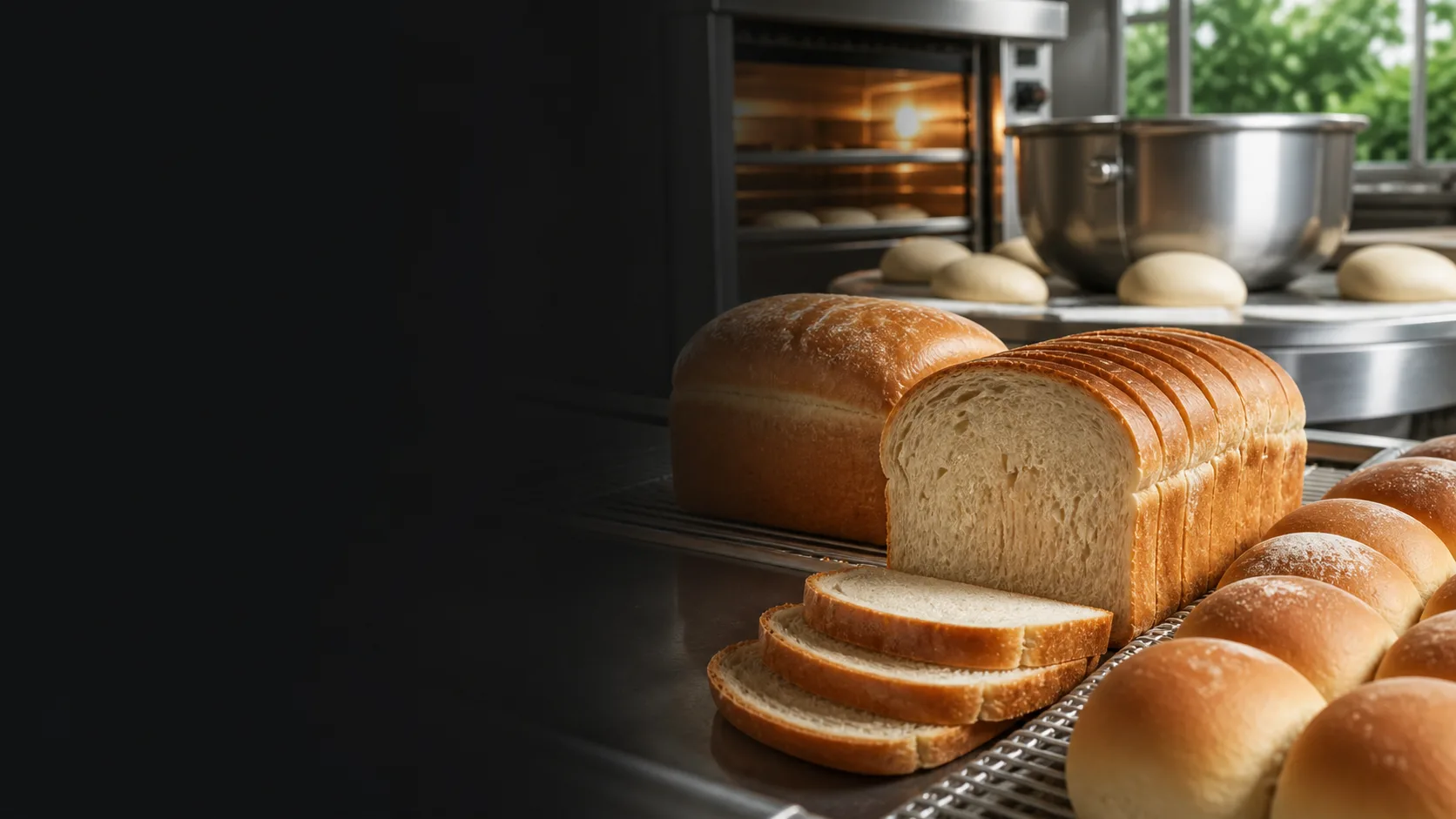
START WITH THE PRODUCT ACTUALLY UNDER REVIEW
“Bread” is not one formulation. Choose the bakery system first.
Select the closest product route so JNP can ask about the right process, problem and comparison conditions.
A sector or product-format example is not a JNP product claim and is not proof of a JNP grade, dosage or result. Candidate and document status must be checked separately.
Gluten-free bakery
Bread · premixes · pizza · grissini · cakesIs the review about gas retention, finished volume, crumb structure, binding, water management or post-bake collapse?
Use this system in my brief →CUSTOMER VALIDATION REQUIREDFrozen bakery systems
Frozen dough · pizza · börek · croissantWhich freeze-thaw, proofing, finished-volume or filling-stability result must be reproduced in the customer process?
Use this system in my brief →APPLICATION CONTEXT REQUIREDFlexible flatbreads
Lavaş · yufka · tortillaIs the priority flexibility, folding, moisture retention, production handling or change during the intended storage period?
Use this system in my brief →RELATED SYSTEM FOR DISCUSSIONFilled bakery & dessert systems
Filled cakes · wafer fillings · fruit fillings · dessert saucesIs the decision about flow control, filling stability, water migration or the baked structure surrounding the filling?
Use this system in my brief →DEFINE THE PRODUCTION BRIEFPackaged loaves, buns & rolls
Sliced bread · hamburger buns · rolls · toast breadWhich production observation is under review, and which current result must remain unchanged across the line?
Use this system in my brief →CHOOSE WHY YOU ARE HERE
Use one route for the decision you need to make.
The selected task carries the industrial-bread context into the inquiry and can be corrected before sending.
Share the bread format, process, observed issue and target result.
Submit the application brief →PROCUREMENT / IMPORTCompare a current gradeIdentify the current reference and what must remain stable or improve.
Prepare a grade comparison →QUALITY / REGULATORYCheck the required documentsState the intended use, market and exact document category.
Review candidate directions →READY TO TEST / BUYPrepare a sample or commercial reviewShare the candidate status, quantity, destination and timing.
Review candidate directions →BUILD THE APPLICATION BRIEF
Four details turn the issue into a testable brief.
Practical answers are enough. JNP identifies the remaining technical questions after the application is understood.
What are you making?
Name the exact bread system and the process or batch conditions that define it.
What is going wrong?
Describe dough gas retention, post-bake collapse, weak thermal setting, volume variation or another observable issue.
What must change—or stay stable?
State the target result, current control and acceptance method.
What defines the buying decision?
Add the current reference, destination market, required documents, quantity and timing.
CANDIDATE CHEMISTRY DIRECTIONS
MC and HPMC enter screening after the problem is defined.
The chemistry labels narrow the review. They do not establish a commercial grade, dosage, performance guarantee or automatic suitability for a bread formulation.
MC
MC enters product-name screening because a reviewed general external application reference gives a reason to compare it under the stated bread conditions. JNP grade, dosage and bread-performance evidence are not published; confirm the direction through document review and customer testing.
- Function to evaluate
- Structure and thermal-setting review
- Candidate screening basis
- MC is a product-name candidate for evaluation against the stated Structure and thermal-setting review conditions. This is a reason to compare, not a grade recommendation or performance conclusion.
- Conditions still to validate
- Settling or separation. Which production result needs to change? Possible comparison points: dough handling, proofed volume, baked structure, bake loss and change after cooling or storage. Hold raw materials, addition order, equipment settings and test timing constant. Agree the method, unit, time point and pass/fail limit before testing.
- Evidence status
- GENERAL APPLICATION REFERENCE ONLY · JNP APPLICATION EVIDENCE NOT PUBLISHED
General application context only. This reference is not a JNP trial, customer case, grade recommendation, dosage or performance result.
HPMC
HPMC enters product-name screening because a reviewed general external application reference gives a reason to compare it under the stated bread conditions. JNP grade, dosage and bread-performance evidence are not published; confirm the direction through document review and customer testing.
- Function to evaluate
- Structure and thermal-setting review
- Candidate screening basis
- HPMC is a product-name candidate for evaluation against the stated Structure and thermal-setting review conditions. This is a reason to compare, not a grade recommendation or performance conclusion.
- Conditions still to validate
- Settling or separation. Which production result needs to change? Possible comparison points: dough handling, proofed volume, baked structure, bake loss and change after cooling or storage. Hold raw materials, addition order, equipment settings and test timing constant. Agree the method, unit, time point and pass/fail limit before testing.
- Evidence status
- GENERAL APPLICATION REFERENCE ONLY · JNP APPLICATION EVIDENCE NOT PUBLISHED
General application context only. This reference is not a JNP trial, customer case, grade recommendation, dosage or performance result.
VALIDATE IN THREE STEPS
Application context is not a JNP product claim.
Move from an exact application brief to JNP evidence and then to a controlled customer comparison.
Confirm the exact formulation and process under review.
A sector or product-format example can open a review; it cannot identify a JNP grade or expected result.
Check the named candidate at its true evidence level.
Product, grade, batch, certificate and market files support different decisions.
Compare the candidate in the actual process.
Agree the control, test conditions and acceptance criteria before sampling.
MC and HPMC remain separate, unverified candidate directions. This page makes no dosage, one-to-one replacement or performance claim.
DOCUMENTS AT THEIR TRUE LEVEL
Ask what each document can support before relying on it.
Availability is confirmed for the named product, commercial grade, batch, certificate scope, intended use and destination market during the review.
Product-level information; it does not define every commercial-grade parameter.
The named candidate and the controlled comparison points used in the review.
Batch results remain distinct from Certificate scope and Product, use and market review.
FROM SAMPLE TO DECISION
Confirm, compare and record the result.
A sample becomes useful only when its conditions, control and acceptance method are agreed in advance.
Confirm the conditions
Fix the bread format, process, current issue, target result and control.
Compare a testable candidate
Align the candidate, evidence, sample conditions and acceptance method.
Record the result and next decision
Use the customer result to select, reject or revise the candidate before commercial review.
EXPECT A DECISION NOTE—NOT A GENERIC REPLY
Know the next decision before a sample or quotation.
JNP should return a clear status, the smallest material gap and the next responsible action.
- 01
The exact product, process and target JNP understood
- 02
The candidate rationale, evidence received and material gaps still open
- 03
The proposed comparison, decision owner and next commercial step
BEFORE YOU CONTACT JNP · OPEN ONLY WHAT APPLIES
Do I need to know whether MC or HPMC is right?
No. Begin with the bread, process and current problem. MC and HPMC are candidate directions, not a decision the buyer must make before contacting JNP.
What helps when I already use another product?
A product name, specification, test method, control sample or description of the result to preserve helps organize a useful comparison.
Does a candidate recommendation confirm final suitability?
No. Final suitability depends on the complete formulation, production conditions, target-market review and the customer's own sample evaluation.
ONE CLEAR NEXT STEP
Submit the bakery conditions you already know.
JNP will identify the smallest information or evidence gap before a candidate, sample or preliminary commercial review advances.